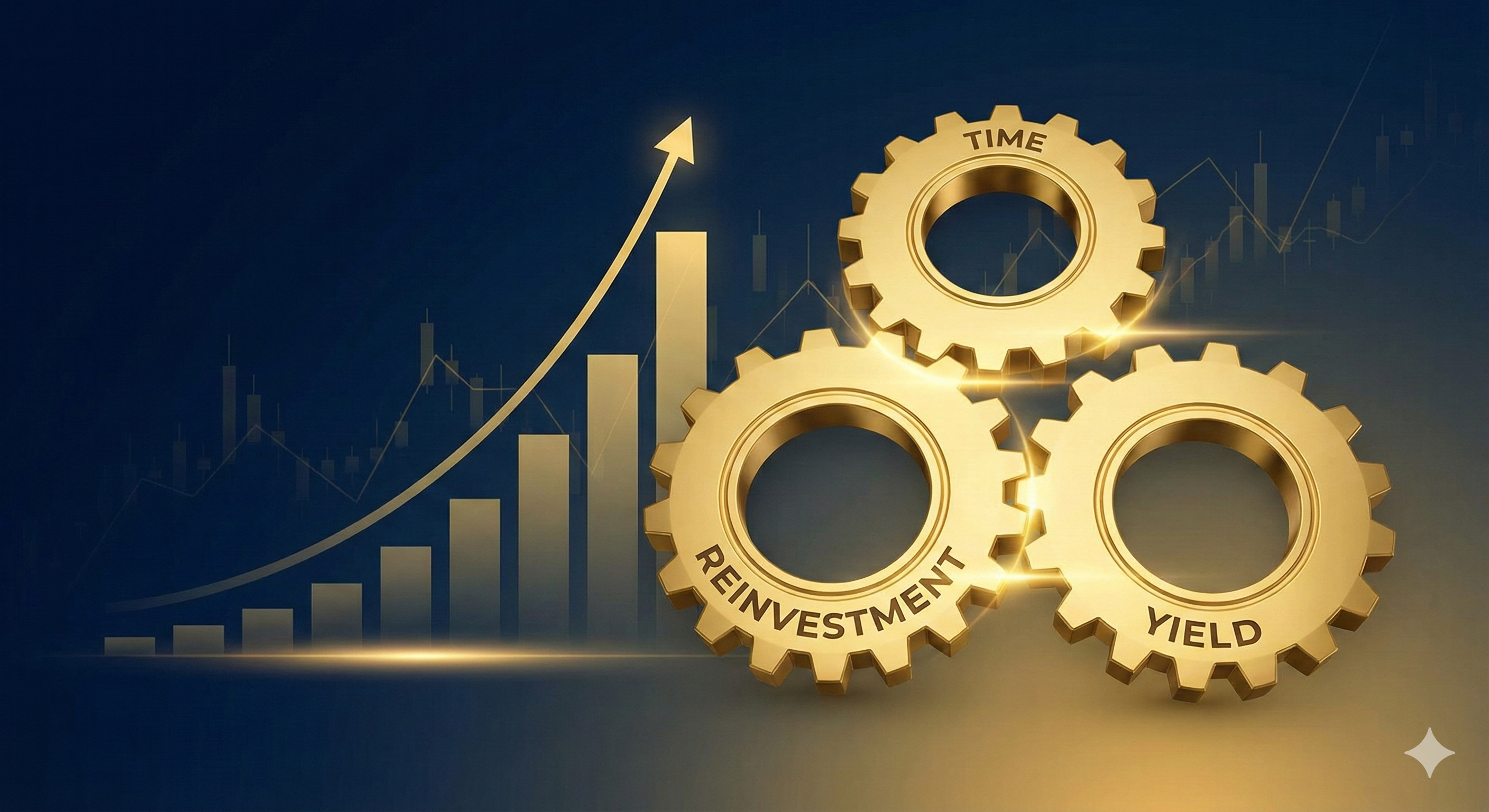
3 Structural Secrets That Turn Compound Interest into Magic
Principles and Strategies to Snowball Your Assets
Compound interest is not just about interest on interest. It exerts a magical power when specific structural principles are aligned. We reveal the three structural secrets to maximizing the snowball effect of your assets.
Understanding the Essence of Compound Interest
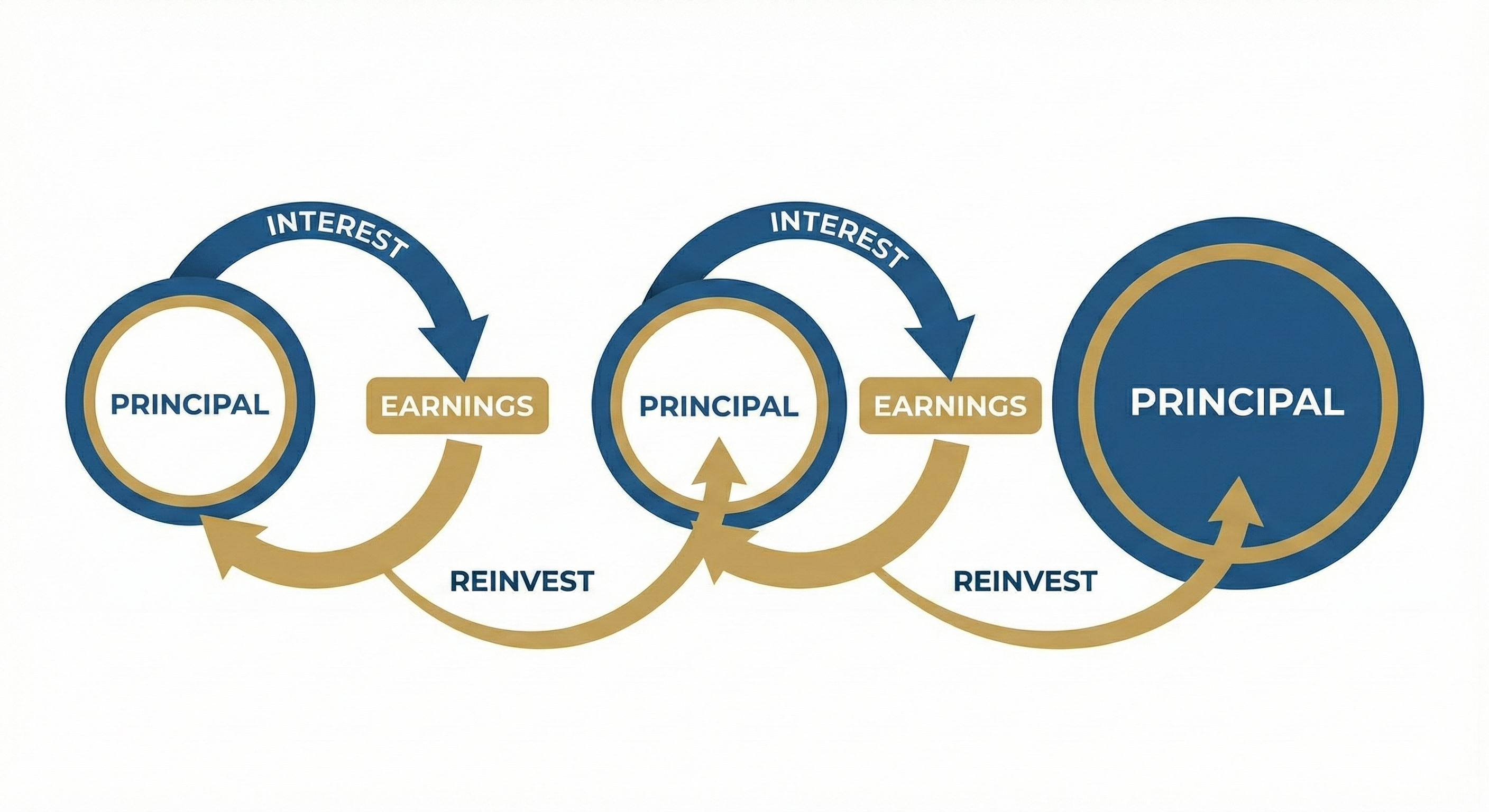
Compound interest is the process where the interest earned on an investment is reinvested to generate even more interest. Unlike simple interest, which is calculated only on the principal, compound interest allows your wealth to grow exponentially over time. The true power of this mechanism lies in the virtuous cycle of "returns generating returns."
However, simply knowing the definition is not enough. To truly experience the magic of compound interest, you must understand the three structural secrets hiding behind the numbers.
Experience the Magic
[INFO] Experience the Magic
Don't just read about it—see the numbers for yourself. Use the RichFlow Compound Interest Calculator to simulate your own wealth growth scenarios.
Secret 1: The Power of Time (The Runway)
The most critical factor in compound interest is "Time." The growth curve of compound interest is not linear; it is exponential. This means that the growth in the later stages is far more explosive than in the beginning.
In the first few years, the difference between simple and compound interest may seem negligible. However, as time passes—after 10, 20, or 30 years—the gap becomes astronomical. This is why the financial maxim "Start as early as possible" is an absolute truth.
Secret 2: The Reinvestment Rule (The Engine)
For the engine of compound interest to keep running, the fuel—your returns—must be fed back into the system. This is the "Reinvestment Rule." If you withdraw your dividends or interest earnings and spend them, the compound interest cycle breaks immediately, reverting to simple interest.
To turn your assets into a snowball, you must leave the snow you've gathered on the ball so it can pick up even more snow. Reinvestment is the core engine that drives the acceleration of wealth.
Secret 3: The Yield Acceleration (The Velocity)
If Time is the runway and Reinvestment is the engine, then "Yield" (Rate of Return) is the speed. In the world of compound interest, even a small difference in yield leads to a massive difference in the final result.
For example, the difference between a 5% return and a 10% return over 30 years is not merely double; it can be more than four times greater. This is why we study asset allocation and investment strategies—to secure that extra 1-2% of yield that transforms our future.
Conclusion: Building Your System
Compound interest is fair. It works for anyone who respects Time, upholds Reinvestment, and strives for reasonable Yields. You don't need a fortune to start. Start small, but start now, and build a system where these three secrets work in your favor.
Frequently Asked Questions (Q&A)
Q: Is it ever too late to start investing?
A: While starting early is best due to the accelerating nature of compound interest, it is never too late. Even a shortened timeline benefits from the principles of compounding compared to not investing at all.
Q: Are low-yield investments pointless?
A: Not at all. With sufficient time and consistent reinvestment, even modest yields compound effectively. However, aiming for a yield that outpaces inflation is generally recommended.
Q: How do I maximize compound interest?
A: Start as soon as possible (Time), ensure all earnings are reinvested (Reinvestment), and optimize your portfolio for the best risk-adjusted return (Yield).
Use Our Tools
[TIP] Use Our Tools
RichFlow offers more than just a compound calculator. Explore our Investment Tools to help plan your financial future.