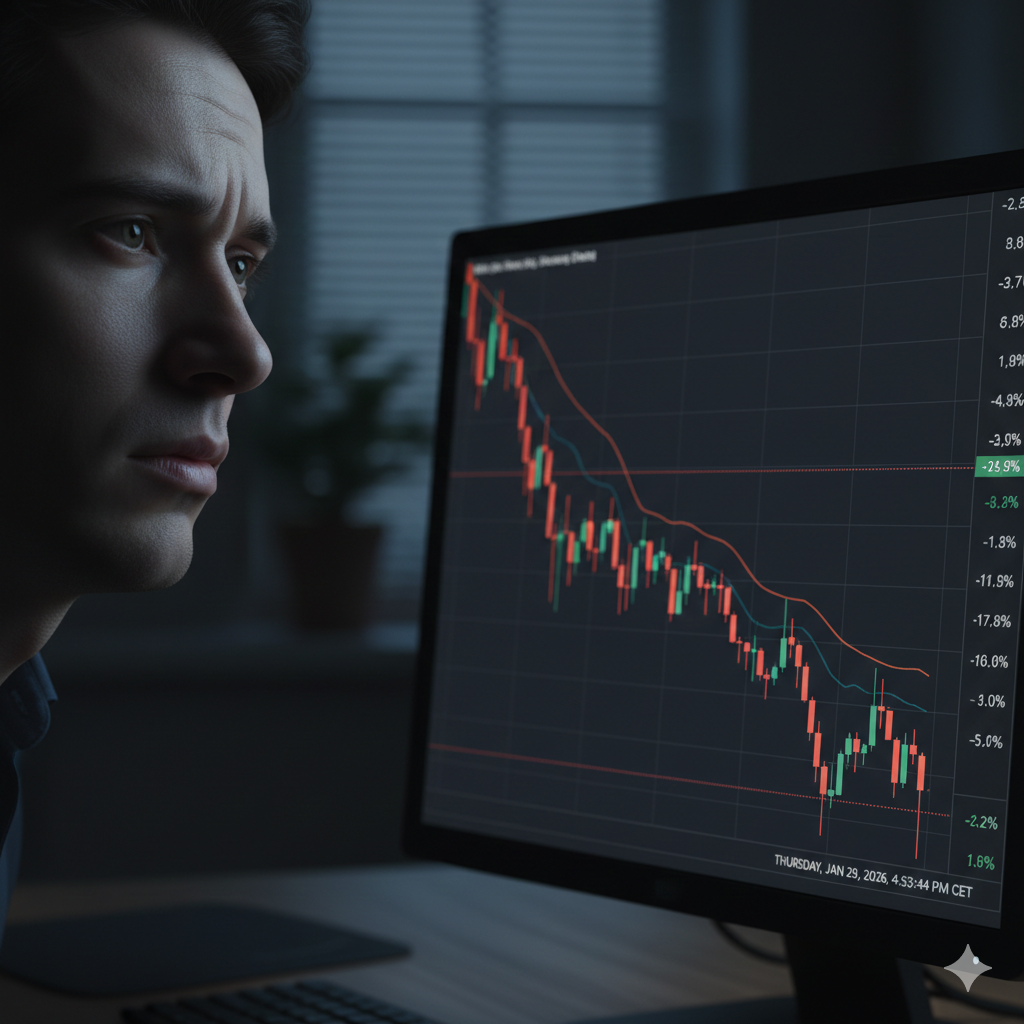
Why Do Most People Fail to Make Money from Investing?
The Psychology and Principles Behind Investment Success and Failure
This article delves into the fundamental reasons why the majority of individuals struggle to profit from investments, explored in an in-depth interview format. It sheds light on the impact of psychological biases, lack of knowledge, unrealistic expectations, undisciplined approaches, and social comparison on investment success.
Introduction
Interviewer: Investing is widely regarded as a crucial means of wealth accumulation for many. Yet, in reality, most individuals don't just fail to make significant profits; they often incur losses. Why does this phenomenon persist? Today, we aim to uncover the answers to this question.
Psychological Barriers: Fear and Greed
Interviewer: Many people describe experiencing an emotional rollercoaster during the investment process. What are the most common psychological mistakes investors make?
Expert: An investor's greatest enemy lies within themselves: the two emotions of fear and greed. Recently, the accessibility of ultra-short-term trading via smartphone apps and real-time information sharing on social media have further fueled these emotional fluctuations, often leading to impulsive decision-making. When the market falls, people hastily sell, fearing greater losses. Conversely, when the market surges, they rush to jump in at high points, driven by the anxiety of being left behind.
Such emotional trading makes it difficult to achieve long-term profits. Realizing large losses while taking small profits is a typical pattern many investors experience, stemming from these emotional responses. While it's crucial to exercise patience and observe market trends objectively, separating oneself from emotion when one's own money is at stake is incredibly challenging. Ultimately, the moment emotion overrides reason, mistakes are repeated.

- Two emotions that ruin investing: Fear and Greed*
Lack of Knowledge and Misunderstanding
Interviewer: It's often said that having sufficient knowledge is important before starting to invest. However, many people seem to jump in without a proper understanding. How does a lack of knowledge or education affect investment failure?
Expert: That’s correct. Investing is not merely buying and selling; it's a process of understanding the value of companies or assets and predicting their future. However, many individuals invest, swayed by rumors or trends, without essential knowledge such as fundamental financial concepts, risk management strategies, or the importance of portfolio diversification. Especially recently, there has been an increase in cases where people invest blindly in new asset classes like cryptocurrencies and NFTs, or derivatives, without proper understanding, leading to significant losses. It's like navigating the open sea without a compass.
When you jump in without knowing exactly what you're investing in, you're easily swayed by minor market fluctuations and prone to making poor judgments. You can't answer the fundamental question, 'Why did I invest in this asset?' Ultimately, without conviction in their investment decisions, anxiety mounts, often leading to losses.

Unrealistic Expectations
Interviewer: Many people tend to aim for a 'one-shot' success with investing or expect large returns in a short period. Why do individuals have such unrealistic expectations about investing?
Expert: Media and anecdotes of success from acquaintances often fuel these unrealistic expectations. Particularly on social media, only successful investment outcomes are selectively shared, making investing appear easy and capable of yielding quick, large profits, thereby amplifying these unrealistic hopes. When someone hears about another person making a lot of money in a short time, they easily fall into the illusion that they can do the same. However, such success stories are extremely rare; most achievements come from prolonged effort and time.
Investing is not magic. The magic of compounding also requires time to materialize. The desire to beat the market in the short term leads to taking excessive risks and makes investors unsatisfied with even small gains. Ultimately, failing to distinguish between reality and expectation leads to increased disappointment and frustration, perpetuating a vicious cycle of emotional errors. It is crucial to have patience and invest steadily from a long-term perspective.
Undisciplined Investing and Lack of Principles
Interviewer: Some investors tend to trade impulsively without any investment principles. What problems can arise from a lack of consistent investment principles or a personal strategy?
Expert: Lacking clear principles or strategies is akin to embarking on a long investment journey without a compass. Without criteria for when to buy or sell, you are easily swayed by every minor market movement. With the increasing accessibility of Mobile Trading Systems (MTS), where trading is possible with just one click, impulsive investing based on momentary emotions has become even more frequent than adhering to pre-established principles. Investors often rely on vague feelings like, 'If I buy now, it seems like it will go up, and if I sell then, it seems like it will drop further.'
Such undisciplined investing leads to frequent trading, generating unnecessary fees and taxes, and can even cause significant losses. Without a personal investment philosophy or criteria, such as a principle like 'sell immediately if a certain loss threshold is reached,' investors are left to merely watch their losses continue to mount. To achieve investment goals consistently without being swayed by emotions, it is essential to establish and adhere to one's own investment principles.
Comparison with Others and Social Pressure
Interviewer: Many people unconsciously compare themselves to others and feel anxious when they hear about others' investment success stories or see impressive returns on social media. What is the impact of comparison with others and social influence on investment decisions?
Expert: Many individuals are swayed by others' 'profit bragging' or listen to rumors about 'jackpot stocks.' The feeling of FOMO (Fear Of Missing Out) – 'Am I being left out?', 'Am I falling behind?' – clouds rational judgment. Swept up in herd mentality, they invest indiscriminately in unverified information or trending stocks, regardless of their own investment plans.
However, everyone's financial situation, investment goals, and risk tolerance are different. Just because a neighbor made a lot of money with a certain stock does not guarantee that the same investment will be successful for you. Constantly comparing yourself to others and feeling rushed ultimately leads them to choose risky investments unsuitable for them, greatly increasing the likelihood of disappointing outcomes. It is crucial to stick to your own pace and principles.

Conclusion
Interviewer: Based on our discussion today, it's clear that the reasons most people fail to make money from investing aren't simply due to market conditions, but stem from internal issues, inadequate preparation, and misguided expectations. Ultimately, investing is a long journey requiring patience, continuous learning, and self-reflection. Thank you for your valuable insights.
Disclaimer
[WARNING] Disclaimer
This article is intended for general information and to enhance understanding of investment and should not be construed as a recommendation for specific investment products or as investment advice. All investments involve the risk of principal loss, and investment decisions must be made based on the investor's own judgment and responsibility. Investors are advised to fully understand all relevant information and consult with a professional before making any investment.